
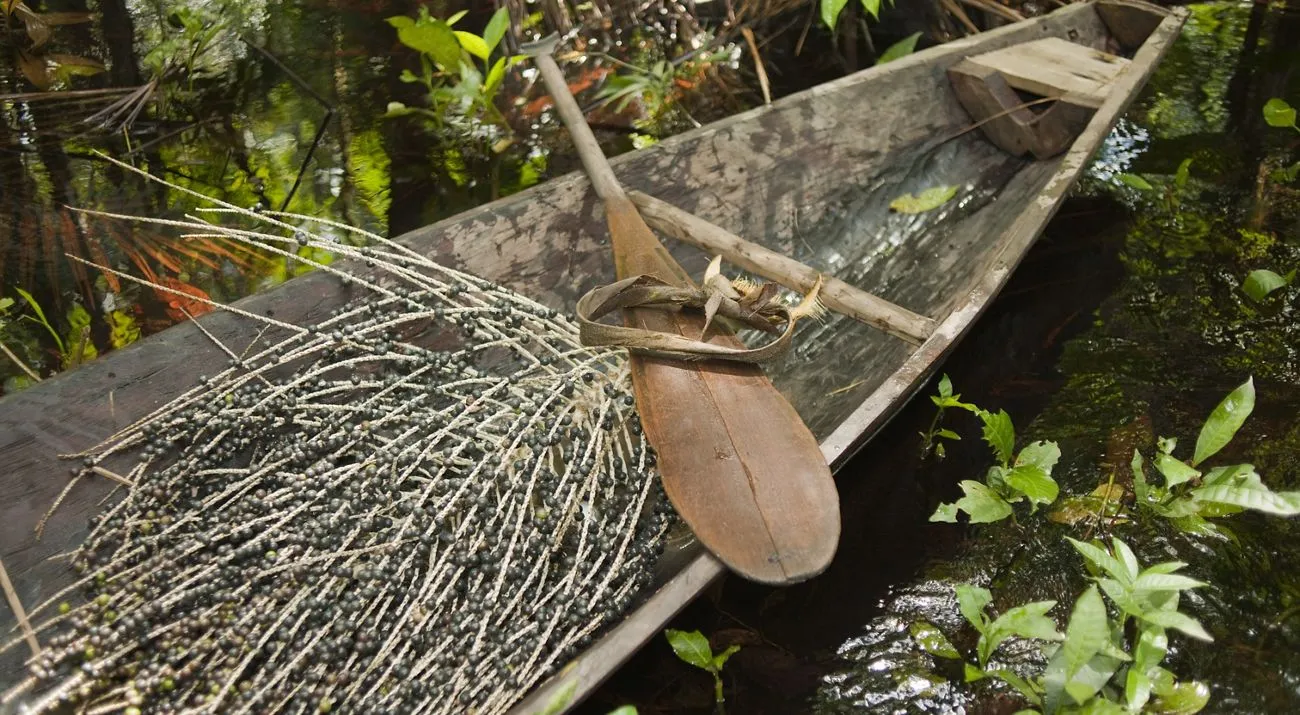
Açaí begins in a place of remarkable abundance.
Along the Amazon River estuary, where warm rain, rich floodplain soil, and flowing water meet, the açaí palm grows tall and slender. From its crown hang clusters of small, deep-purple fruits.
The journey from palm to bottle is not rushed.
It is shaped by seasons, skilled hands, careful preparation, and a short natural window after harvest. Every step reflects the importance of honoring what God has provided through creation.
Açaí is more than a familiar wellness ingredient.
It is a fruit with roots.
Where the Açaí Palm Grows
Açaí comes from the palm species Euterpe oleracea. It is native to tropical South America and is especially common along the Amazon River estuary and the floodplains of Brazil’s Pará and Amapá regions.
These floodplains are often called várzea forests. They are seasonally inundated as river levels rise and fall. The water brings nutrient-rich sediment, helping create a productive growing environment for the palms.
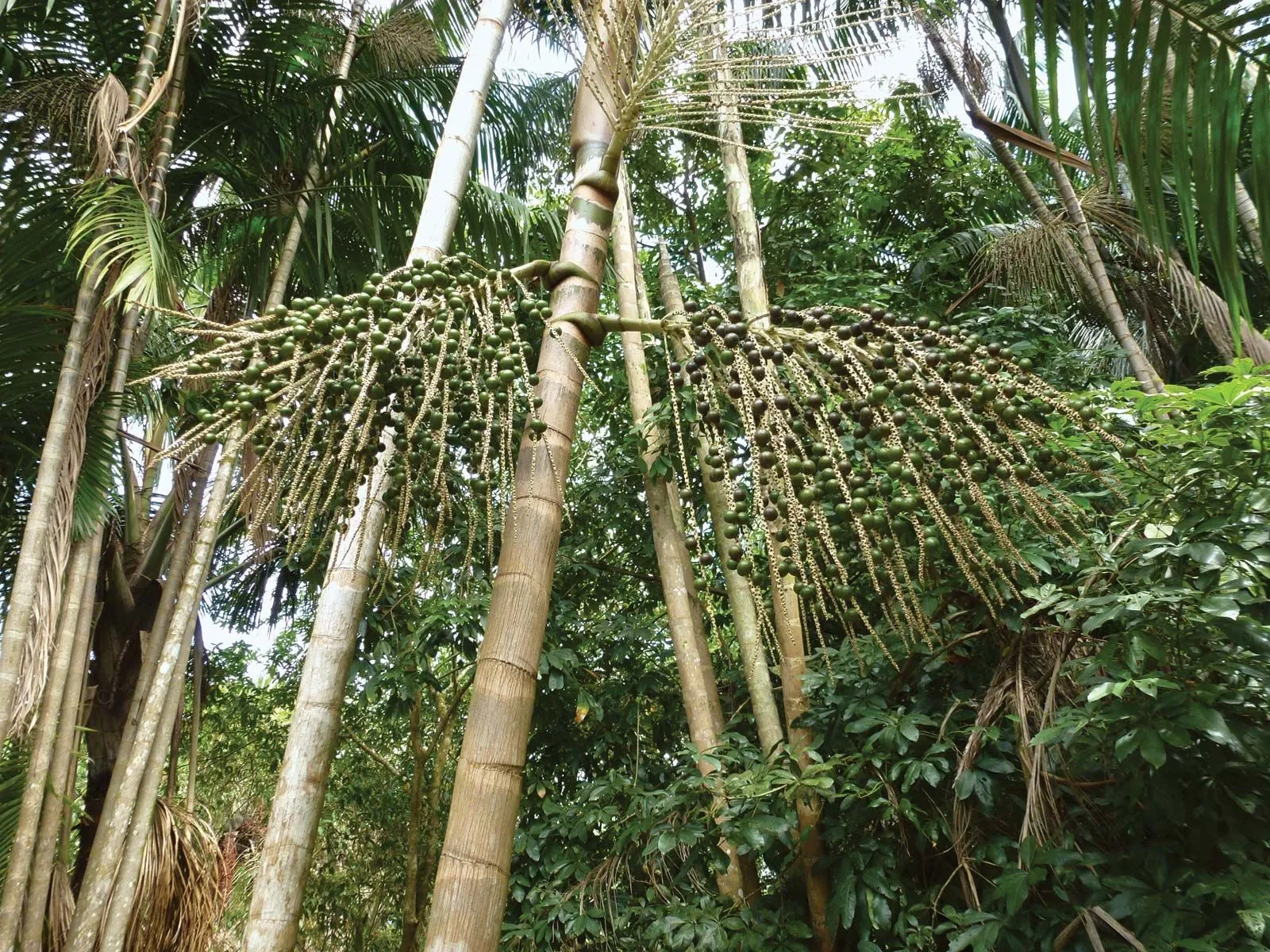
The açaí palm is naturally suited to:
- Warm tropical temperatures
- High humidity and regular rainfall
- Moist, fertile soils
- Floodplain environments that may be seasonally covered by water
- Open space for its tall stems and spreading crown
A mature palm may have several slender stems growing together. Some can reach approximately 15 to 30 meters in height. Near the top, long leaves form a green crown. Fruit clusters develop beneath this crown, hanging from branching stems.
The berries are small. Each fruit contains one large seed and a thin layer of pulp. That delicate pulp is one reason açaí must be handled with care.
How Açaí Is Planted and Cultivated
Açaí can grow naturally in the Amazon, but intentional cultivation helps support a more consistent harvest.
Farmers commonly begin with mature seeds. In some growing practices, the seeds are soaked in water for approximately 24 hours before planting. This softens the seed and may encourage more even germination.
Seeds may then be placed in nursery beds containing sand and organic matter. Young seedlings are protected while they develop. After they reach a suitable size, they can be transplanted into prepared growing areas.
Spacing matters.
Açaí palms need room for their stems, leaves, and fruit clusters. Cultivation guidance commonly recommends several meters between palms. In some managed systems, palms may be planted approximately four to five meters apart.
The goal is not simply to grow more palms.
It is to support a healthy relationship between the plant, the soil, the water, and the people who care for the land.
Traditional Amazonian growing systems may also include other useful plants, such as cocoa and cupuaçu. This type of agroforestry can create a more diverse environment than a single-crop field.
Açaí palms usually require several years before producing meaningful fruit. The exact timing depends on the variety, soil, water, climate, and level of care. In floodplain communities, knowledge is often passed from one generation to the next.
Planting is patience.
Cultivation is stewardship.
When Açaí Berries Are Ready to Harvest
Açaí palms may produce fruit at different times throughout the year, but harvests are often seasonal. Larger harvest periods commonly occur during the drier months, although the exact timing varies across the Amazon.
Ripeness is important.
The berries generally change from green to a dark purple color as they mature. Some varieties may remain green when ripe, so local experience and careful observation help guide the harvest.
The fruit grows high above the ground in heavy clusters. This makes harvesting a skilled and physically demanding practice.
Harvesters climb the slender palm stems to reach the fruit. Traditionally, some use a loop made from palm material around the feet to help grip the trunk. Once they reach the crown, they carefully cut the ripe cluster and descend with the fruit.
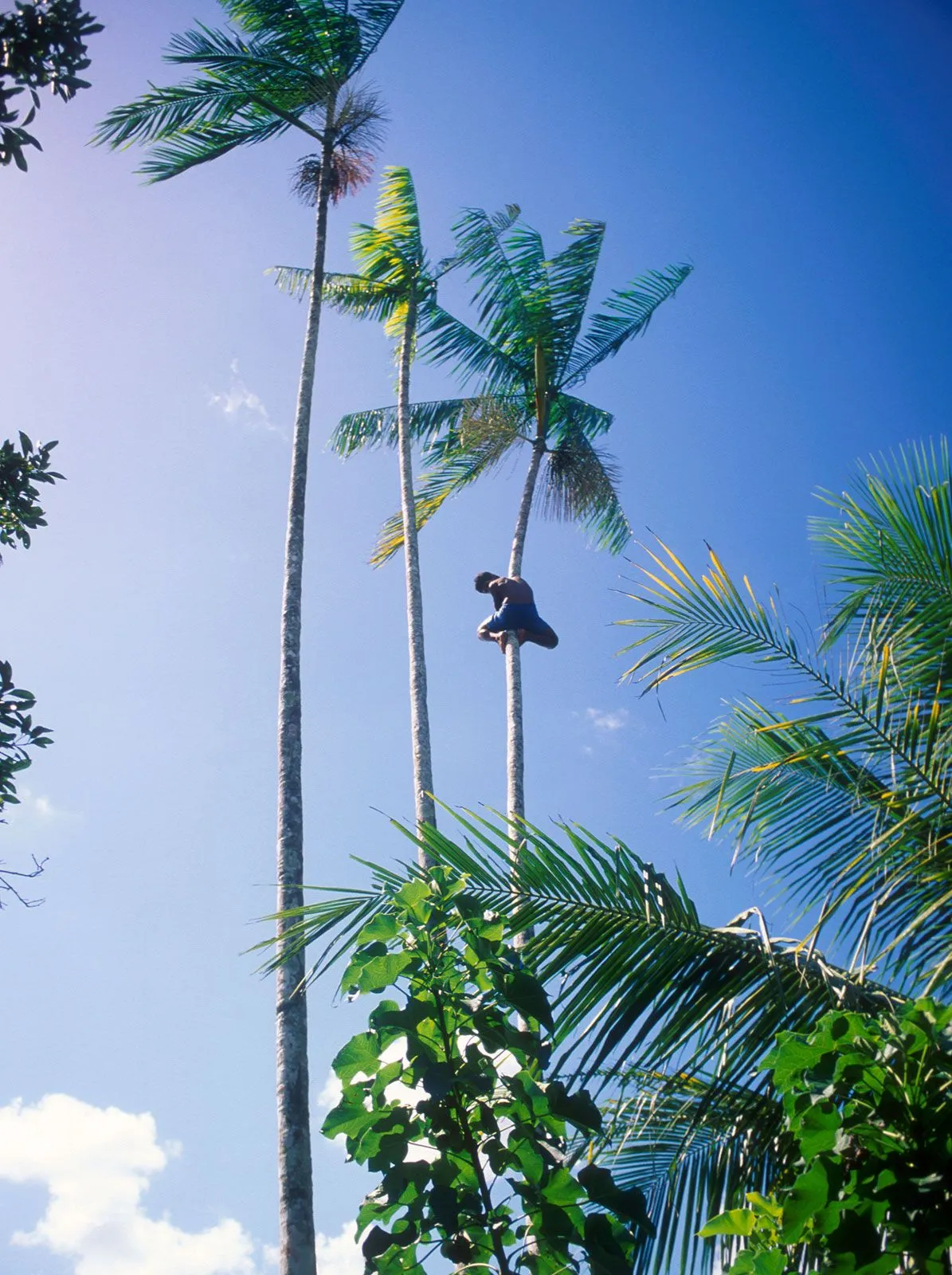
The work calls for balance, timing, and experience.
It also reminds us that every natural ingredient has a human story. Responsible wellness should honor the people, communities, and ecosystems connected to the harvest.
Sustainable management can help protect the palms and maintain the natural abundance of the floodplain. Careful harvesting also allows the palm to continue producing rather than being removed entirely.
The fruit is gathered.
The journey continues quickly.
The 24-Hour Harvest Window
Fresh açaí is highly perishable.
Because of its delicate pulp and natural composition, the fruit can begin to deteriorate within approximately 24 hours after harvest. This short window is one of the most important parts of the açaí story.
Fresh berries are commonly transported to nearby collection points or processing facilities soon after they are gathered. In Amazon communities, boats may carry baskets of fruit through the river network toward local markets and processors.
There is little room for delay.
This is why açaí sold outside its native growing region is usually not transported as fresh berries. Instead, it is quickly transformed into a more stable ingredient.
The quality of the final ingredient depends on what happens early.
Prompt handling helps protect the fruit’s character and makes it possible for açaí to travel from the Amazon to wellness products around the world.
How Açaí Becomes Pulp
After harvest, the berries are sorted.
Leaves, stems, damaged fruit, and other debris are removed. The berries are then washed carefully.
Traditional preparation often includes soaking the fruit in water. This softens the outer skin and pulp, making it easier to separate from the large inner seed.
The softened berries are then agitated or placed into a mechanical pulping machine. The machine presses and rubs the fruit against screens. The thick purple pulp passes through, while the seeds and larger plant material are separated.
The result is a smooth, richly colored açaí pulp.
In local communities, this pulp may be served fresh in drinks or spooned into traditional foods. For longer-distance use, it must be preserved quickly.
This is where preparation becomes preservation.
Frozen Pulp, Freeze-Dried Powder, and Complex Forms
Açaí pulp may be rapidly frozen soon after extraction. Frozen pulp can then be transported under controlled conditions and later used in beverages, smoothies, concentrates, or other food products.
Another method is freeze-drying.
During freeze-drying, the pulp is first frozen. It is then placed in a vacuum environment, where the ice is removed as vapor. This lowers the moisture content and creates a lighter, more shelf-stable powder.
Freeze-dried açaí can be blended into powders, extracts, concentrates, and botanical complexes.
The form may change.
The care remains.
Acaimax Cleanse includes acai berry fruit extract as part of a broader proprietary blend. The formula also contains psyllium powder, inulin, slippery elm bark, aloe ferox powder, acidophilus, black walnut hulls, ginger root, hyssop leaf, and papaya fruit powder.
This is not a dramatic reset.
It is a supportive addition to a thoughtful routine.
Bringing Açaí Into a Daily Wellness Ritual
For those exploring an acai berry detox cleanse, it is helpful to view the practice as part of a balanced lifestyle rather than a quick solution.
A simple daily ritual may include nourishing meals, adequate water, gentle movement, rest, prayer, and mindful supplementation.
Acaimax Cleanse is designed to accompany that rhythm. The product page suggests taking two capsules once daily, either together or one during the day and one in the evening. Do not exceed the suggested amount.
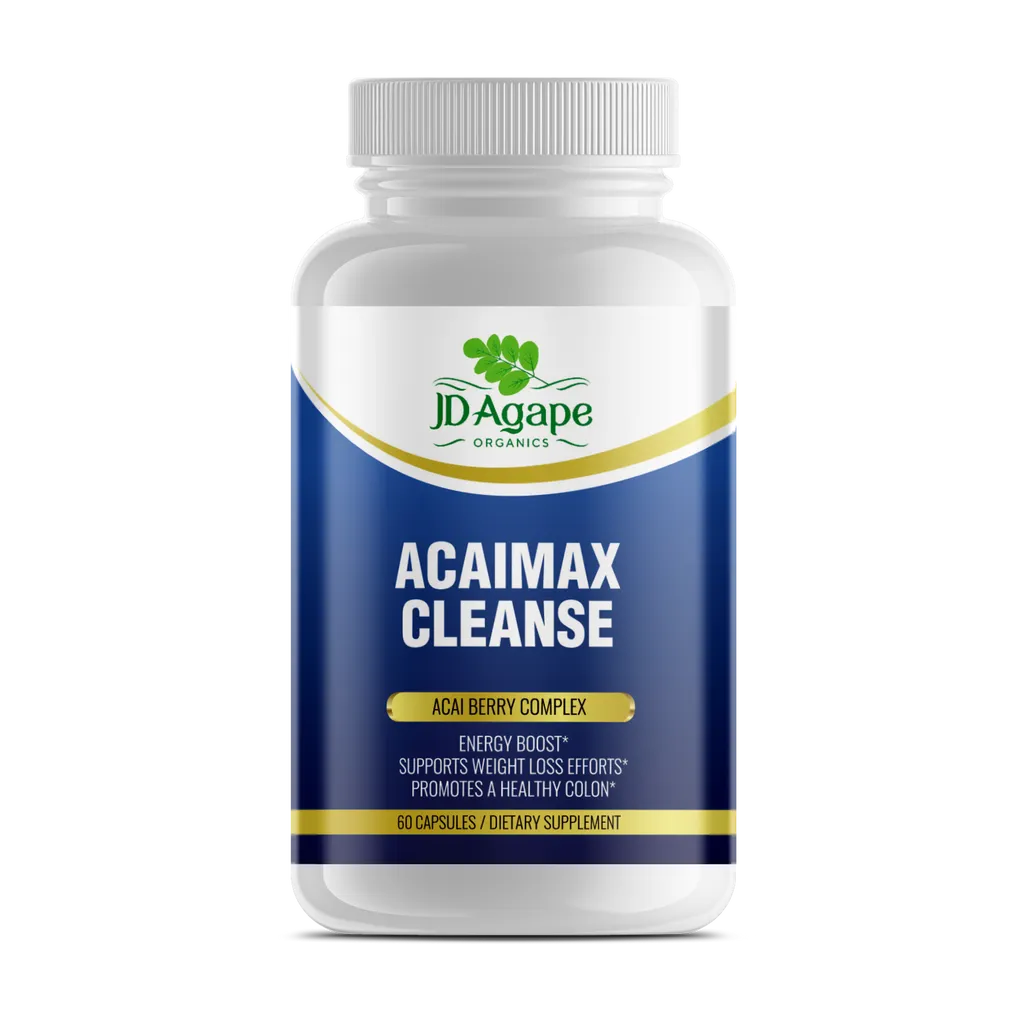
Acaimax Cleanse is currently available for $25.00, reduced from $29.97, with 60 capsules per container.
As your wellness practice grows, other organic wellness supplements may become part of your personal rhythm. Some may choose Oceanic Immunity for an immunity-centered ritual, while Minessentials may complement a mineral-focused routine.
Each product has its own purpose.
Each ritual can remain simple.
A Fruit Prepared With Purpose
From seed to palm.
From palm to cluster.
From cluster to pulp.
From pulp to powder or complex.
Açaí’s journey reflects patience, attention, and stewardship. It begins in the living floodplains of the Amazon and continues through the hands of harvesters, processors, formulators, and families who value what nature provides.
At JD Agape Organics, we believe wellness can return to simplicity.
Pure ingredients from nature.
Formulated with intention.
Care for the body.
Respect for the earth.
A daily practice of gratitude and vitality.
Acaimax Cleanse offers a gentle way to include the essence of açaí in your natural daily vitality routine. May it serve as a supportive companion as you care for the body and honor the gifts of creation.
These statements have not been evaluated by the Food and Drug Administration. This product is not intended to diagnose, treat, cure, or prevent any disease. Please review the product label and consult a qualified healthcare professional with questions about supplementation, especially if you are pregnant, nursing, taking medication, or managing a health condition.